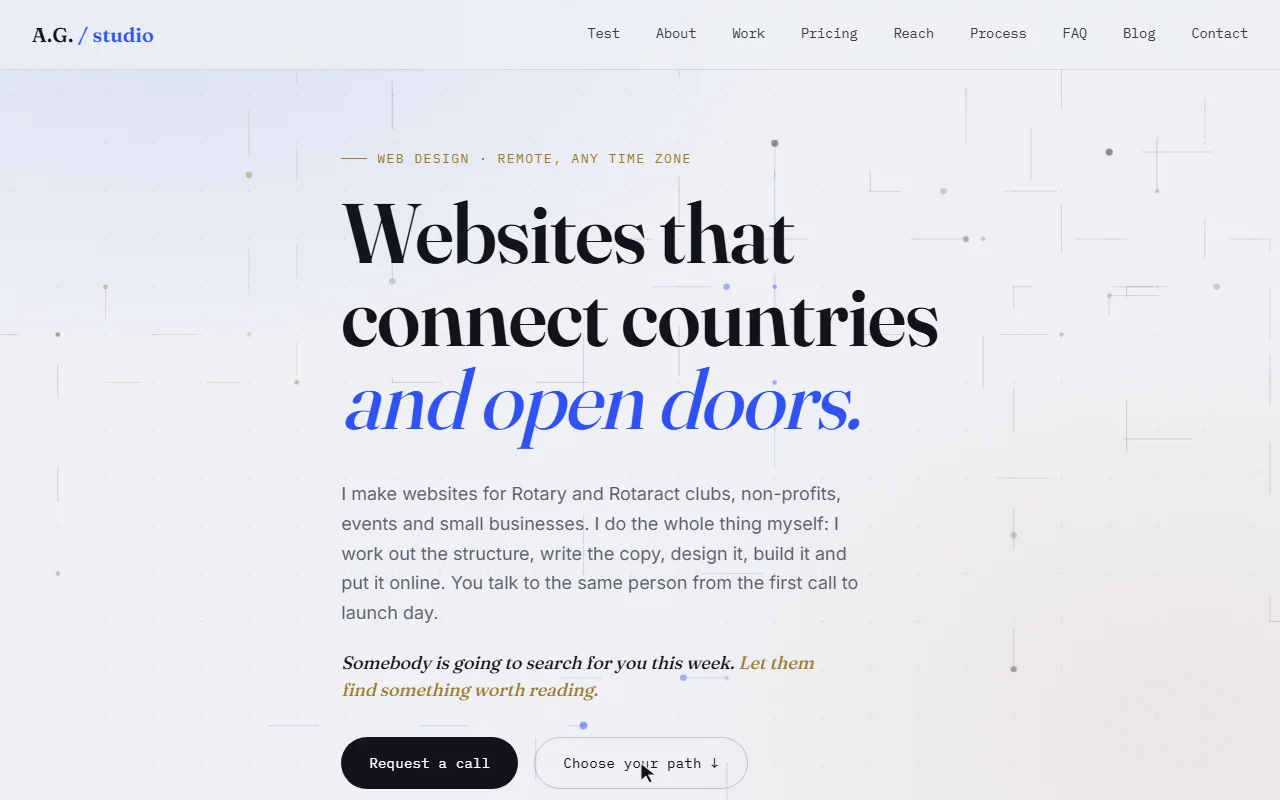
I make websites for Rotary and Rotaract clubs, non-profits, events and small businesses. I do the whole thing myself: I work out the structure, write the copy, design it, build it and put it online. You talk to the same person from the first call to launch day.
Pick one. Each page has a before/after, real projects, the reasons a site pays for itself, and a one-minute test.
For when new members only ever arrive through a friend of a friend, and the club's projects vanish into a group chat.
For clubs & NGOs → 02For a company, a practice or one person with a skill. People will look you up before they reply to you.
For goals & growth → 03A conference, a gala, a fundraiser, a district assembly. The programme, registration and sponsors go on one page instead of a PDF.
For events →Seven questions. You get a score out of 100 and a straight answer on whether a site is worth paying for right now. Sometimes the answer is no.
Leave your number and I'll call you. Twenty minutes, free. We go through your answers and I tell you what I'd build, or whether I'd wait.
Book my free call
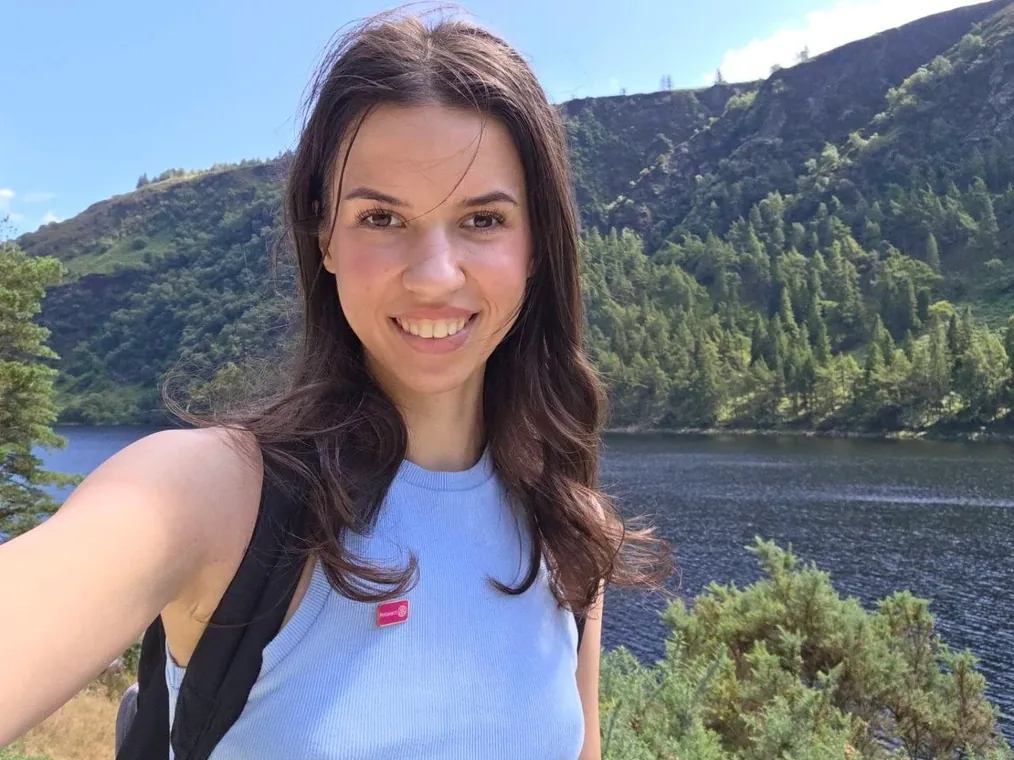
Me, in Glendalough
Every site in this portfolio was designed and built by me. There's no agency behind this page and nobody I hand the work off to.
This year I'm president of a Rotaract club, which is the reason the non-profit prices here are lower. I know what a club gets out of a site that works. I also know how much time a volunteer board doesn't have. Most of my other clients are small businesses and people who work for themselves. We've never met in person and it hasn't mattered: we talk on calls, and I send drafts you can click through in a browser.
A partner club on another continent, a client in a time zone you've never worked in, a volunteer who moved last year. They all find you the same way, by typing a name into a search box.
Club volunteers and paying customers want different things from a page. I've written for both, and I know they don't read the same way.
Before I draw a single screen, we agree what the site is supposed to get people to do. That might be joining the club, booking a call or signing up for the gala. The layout comes from that.
I've built bilingual sites from scratch, with the language switch, the typography and a tone that suits each audience. A translated menu on its own doesn't make a site bilingual.
I use animation to show what matters first and what comes next. If something moves and doesn't help anyone read the page, I take it out.
Choose the closest match. Each page has prices, examples and a calculator that gives you a rough figure before we talk.
For a business that needs more enquiries, with copy and search set up to get them.
See business pricing →Your work, your prices and a way to reach you, all on one page.
See freelancer pricing →For clubs and charities, at a lower rate. Its main job is bringing in members.
See non-profit pricing →These are live sites. Each one had a job to do, and the numbers in the cards come from after launch.
The site you're on. It has a world map you can play with, a pricing section and a quiz that ends with an actual price estimate.
Present the work itself as proof of the craft — a designer's own site is the first thing a prospective client judges.
What I did
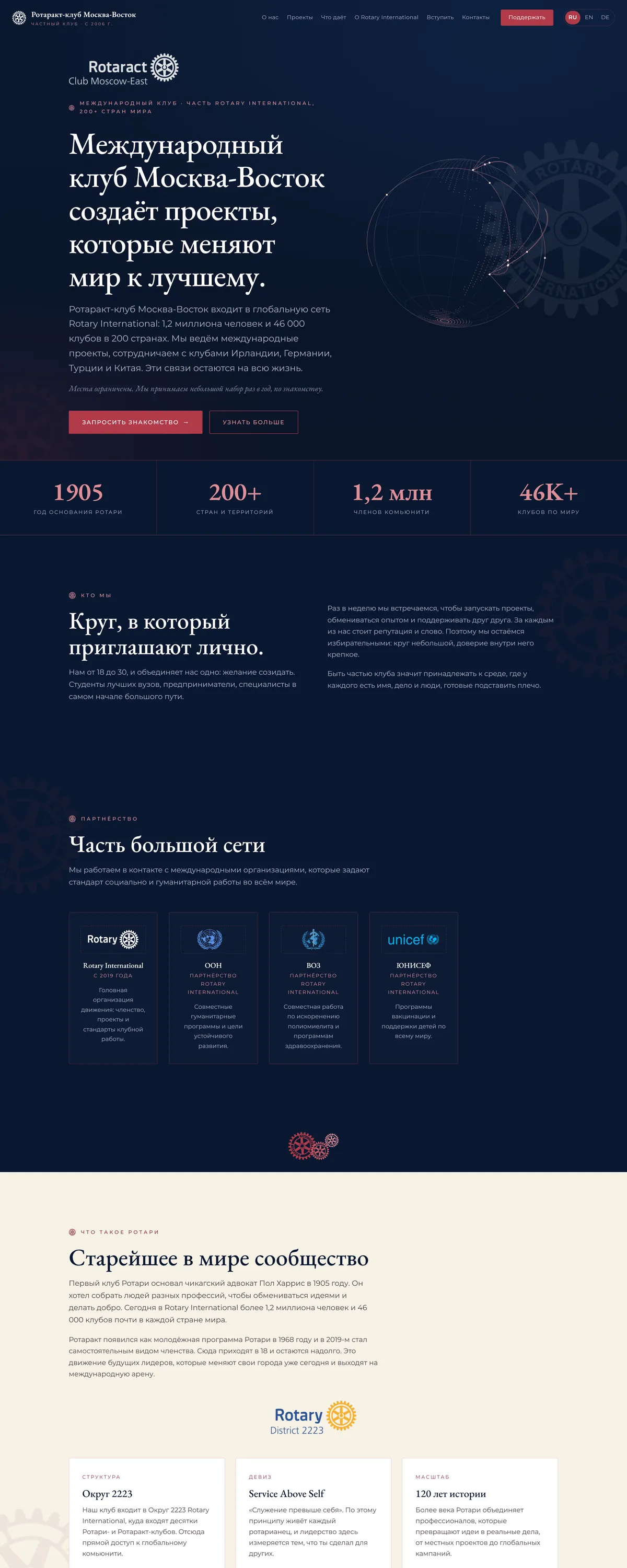
A club site in two languages. It covers the club's history back to 2006, its partner clubs abroad and a small grant scheme for members' projects.
The club had no website at all — no way for prospective members to learn what it does or apply to join.
What I did
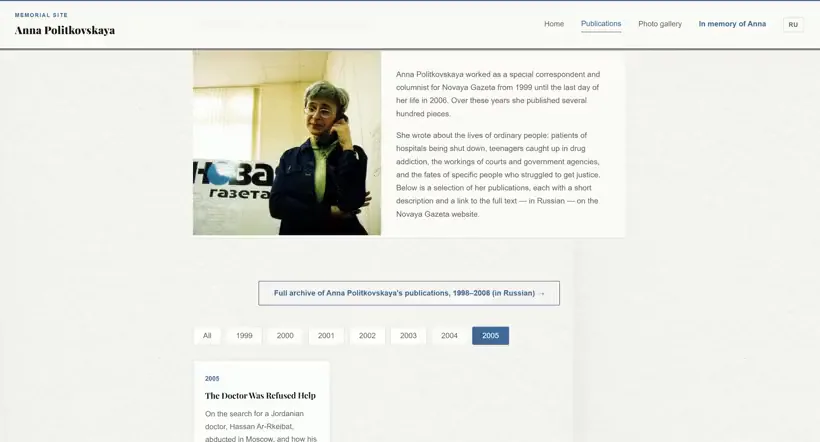
A memorial site for the journalist. It holds her biography, her articles sorted by year from 1998 to 2006, and a page where her former neighbours can back a memorial plaque on her building.
Her work was scattered across old newspaper pages and press mentions. I wanted one place that tells her story plainly, and a way for people to sign up in support of the plaque.
What I did
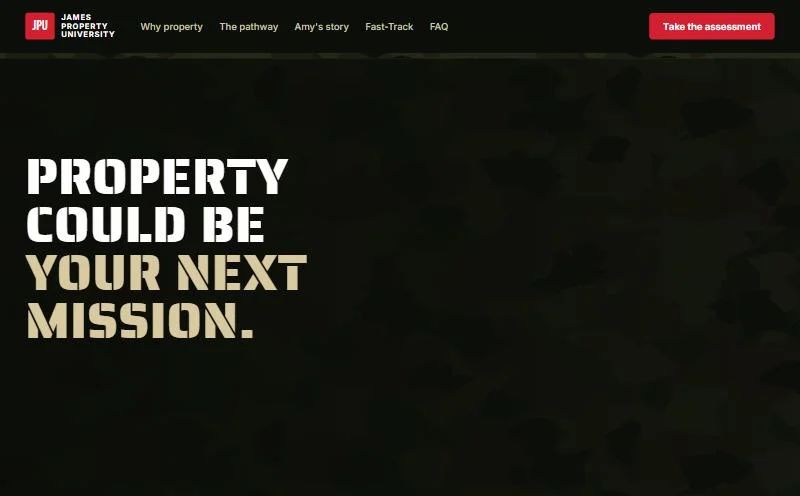
A landing page for a property education company, written for people serving in or leaving the armed forces. It has an intro animation and an assessment that ends in a call booking.
The company's usual pitch didn't speak to service personnel. This page talks to them in their own terms, and the guides bring them in from search.
What I did
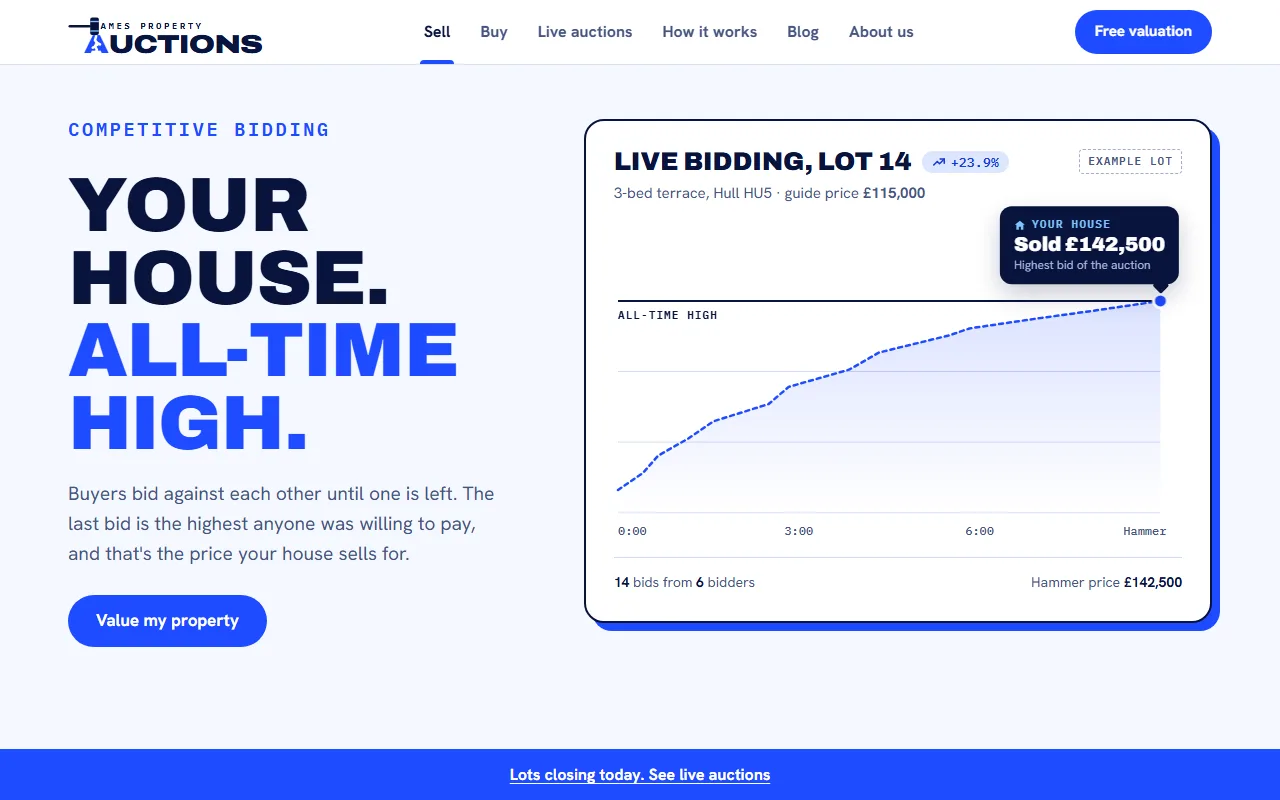
A site for a property auction house, with separate pages for sellers and buyers and a blog. The sell page shows how bidding pushes a price up on a live chart.
Sellers and buyers want different things from an auction house. Each gets its own page, and the blog answers the questions people type into Google before they sell.
What I didThree kinds of project. Swipe or use the arrows.
The club numbers are real and come from the site's first two weeks. I've no data yet for the other two slides, so they describe the usual situation.
Share of adults who say they trust a business. Source: .ie Consumer Trust research, Core Research, 1,000 adults, June 2023.
Every package includes the copy, the SEO and the build. These are starting prices. I give you the real number after we've talked through what you need.
A Rotary club gets the same work from me as a company does. I don't cut anything. The price is lower because I'm a Rotaractor myself, and this is my way of giving something back.
One club site can bring in the member who goes on to run the next fundraiser, and that fundraiser can buy a wheelchair, a school lunch programme or a well. I'd rather that happened.
Research pages for a scientist, a lab or a university project go on the same lower rate, because I think good research deserves to be easy to find.
Business projects pay the standard rate, and that's what makes the discount possible.
— AlexandraNon-profit rate: for registered Rotary and Rotaract clubs, other non-profits and academic or research pages. The struck-through figure is the standard price for the same package. Prices exclude VAT and include the first year of hosting and the domain.
Standard rate, for companies, founders and independent professionals. Prices exclude VAT and include the first year of hosting and the domain.
If you pay the standard rate, part of it goes towards a club or a researcher getting their site cheaper. You get exactly the same work either way.
Because two sites in the same package can be very different jobs. The number moves with how many pages there are, how much text I write from scratch, what has to plug into the site (payments, bookings, a CRM) and how much custom animation you want. After one call I can give you a figure.
Curious exactly what's inside each tier? The breakdown below opens up section by section.
Most sites take two to four weeks. You see the design before I build anything.
We talk about who the site is for and what you want them to do. Then I plan the sections and write a first draft of the text.
I show you the colours, fonts and the main screens. Nothing gets built until you've said yes.
I build the site and check it on phones, because that's where most of your visitors will be.
The site goes live on your domain. You get every login and a short guide on how to edit things.
A one-page site usually takes one to two weeks. A multi-page club or business site runs two to four weeks, depending on how quickly content and feedback come back to me. Signature-tier projects with custom animation take longer and get a specific timeline after the brief.
Maybe you don't. Ask yourself one thing: in the last three months, did anyone get in touch because of the site? If they did, leave it alone. If nobody did, we can look at why on a free call.
A filled-in brief, your logo and any brand colors if you have them, and whatever content already exists — text, photos, past materials. If content isn't ready, that's fine too; we scope copywriting into the project instead.
Either. If you have text ready, I structure and edit it for the web. If you don't, I can write it from scratch after a short call — that's factored into the price as copywriting, not assumed to be free.
Leave your number in the form below. Over a short call I'll suggest a package and a price range, and you're not committing to anything.
Small edits and content updates, yes — those are quick. Bigger structural changes are scoped and quoted separately, the same way the original project was.
Yes, all my work is remote. We talk over Zoom, Google Meet or WhatsApp, at a time that suits your time zone, and you review drafts in your own browser. Prices are in euros, and I can invoice in another currency.
You do. The files, the domain, the hosting account — all of it stays under your name and your control. I build it, you own it outright.
Yes. Hosting, domain registration, and deployment are included in every price tier — I set it all up as part of the build and walk you through it, with nothing extra to pay to get live.
Yes. A lot of clubs start with Foundation and add pages, a second language or online payments a year later. You keep the non-profit rate.
Leave your number and a good time to call, and I'll ring you back. It's free and takes about twenty minutes. If it's quicker, message me on WhatsApp or email alexgranovskaia@gmail.com.
Practical notes for clubs, small businesses and event organisers. All articles →
Most people who hear about a club look it up before they come to a meeting. Here's what they find, and what a club site needs.
Read the article → BusinessWhat the research says about how clients check you out, and when Instagram really is enough.
Read the article → EventsWhy PDFs and Google Forms lose registrations, and what an event page needs so people sign up.
Read the article →